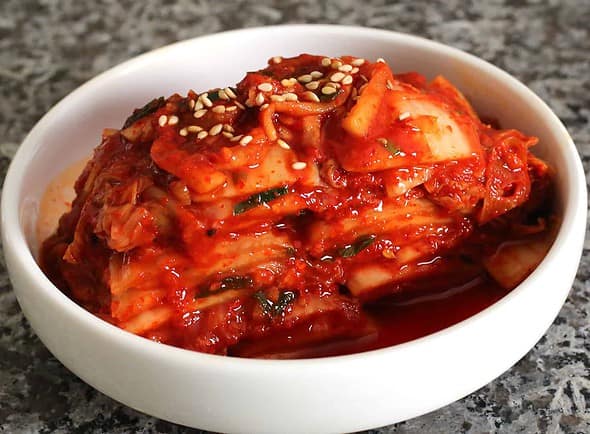
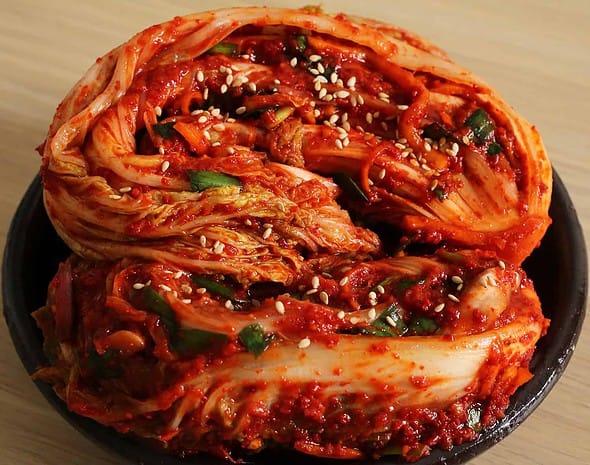
Today I ’ megabyte going to show you how to make classic, blue, traditional chinese cabbage cabbage kimchi called tongbaechu-kimchi, a.k.a. baechu-kimchi or pogi-kimchi. But this cup of tea is therefore common and iconic among Koreans that we plainly call it “ kimchi. ” When people talk about kimchi, this is the cup of tea they ’ rhenium referring to, despite the fact that there are many kinds of kimchi in korean cuisine, and many made with chinese cabbage cabbage, besides. Over the years I ’ ve posted recipes for a few of them, but I ’ ve never made an in-depth video for making tongbaechu-kimchi ! I ’ ve made a video recording for mak-kimchi ( easy kimchi ), which is very exchangeable but is easier because you to chop up the boodle first, and I ’ ve made an extremist simple yangbaechu-kimchi ( emergency kimchi ). many years ago I even posted a recipe showing how to make baechu-kimchi with kkakdugi in one batch. But until now, I ’ ve never posted the most classic and traditional chinese cabbage boodle kimchi. This kimchi uses the unharmed cabbage flick, which makes it more labor-intensive than the other ones on my web site, because you ’ ll need to take clock to spread the piquant paste leaf by leaf. It ’ s more work, but this is the traditional style and if you can make this kind of kimchi well, you can consider yourself thoroughly at korean cook. As I mention in the video, my ma used to make kimchi from 200 heads of cabbage ! This was kimjang kimchi, made with her friends at the begin of winter, and mean to concluding until the bounce. 3 to 4 of her friends would come over and help her chop vegetables and most importantly, spread the paste on the leaves. This constantly needs to be done by hand. They would bring their own rubberize gloves, and spend the day talking and laugh, and always had pollack stew or gripe radish soup for lunch. They had a draw of fun !
At the end of the day they would take some kimchi home plate with them, but my ma would get all the lie, which lasted my hale kin through the winter. And when my ma ’ second friends needed to make their winter kimchi, my ma brought her gloves over to their houses and helped them, like they did for her. In the video I besides show you how to ferment it in a traditional onggi. Using an onggi is not compulsory, but for those of you who have one already, this is how you use it ! If you don ’ t have one, equitable use a BPA-free credit card container, or a glass container. I answer many early frequently asked questions about kinchi-making in this video : I hope you enjoy the recipe, and if you love kimchi, I encourage you to make your own kimchi at home. It ’ second delectable, easy, and a playfulness matter to do ! 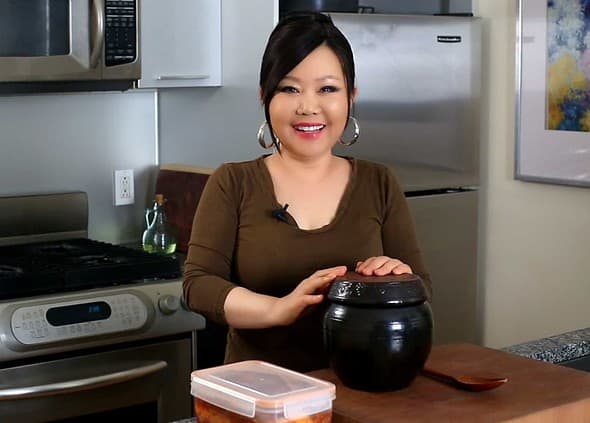
Ingredients
Makes about 8 pounds ( 3.6 kilogram ) of Kimchi
For salting cabbage :
Read more: Easy Kimchi Fried Rice
- 6 pounds (about 2.7 kg) napa cabbage
- ½ cup Kosher salt (2.5 ounces: 72 grams)
For making porridge :
- 2 cups water
- 2 tablespoons sweet rice flour (glutinous rice flour)
- 2 tablespoons turbinado sugar (or brown or white sugar)
Vegetables :
- 2 cups radish matchsticks
- 1 cup carrot matchsticks
- 7 to 8 green onions, chopped
- 1 cup chopped Asian chives (buchu), optional (substitute with 3 green onions, chopped)
- 1 cup water dropwort (minari), optional
Seasonings and spices :
- ½ cup garlic cloves (24 garlic cloves), minced
- 2 teaspoon ginger, minced
- 1 medium onion, minced
- ½ cup fish sauce
- ¼ cup fermented salted shrimp (saeujeot) with the salty brine, chopped
- 2 cups hot pepper flakes (gochugaru)
Directions
Prepare and salt the boodle :
- If the cabbage cores stick out too much, trim them off.
- To split a cabbage in half without shredding the densely packed leaves inside, first cut a short slit in the base of the cabbage, enough to get a grip on either half, and then gently pull the halves apart so the cabbage splits open.
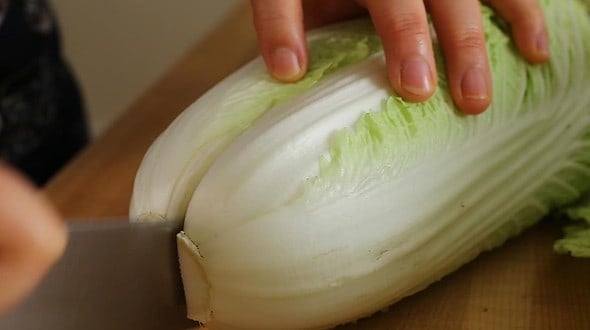
- Cut a slit through the core of each half, 2 inches above the stem. You want the cabbage leaves to be loose but still attached to the core.
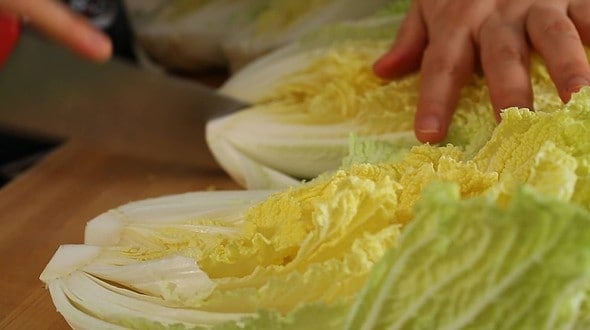
- Dunk the halves in a large basin of water to get them wet. Sprinkle the salt between the leaves by lifting up every leaf and getting salt in there. Use more salt closer to the stems, where the leaves are thicker.
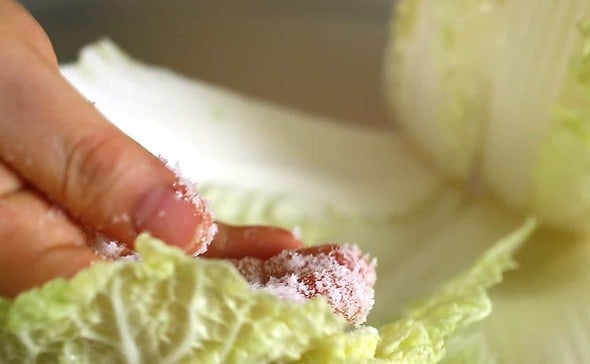
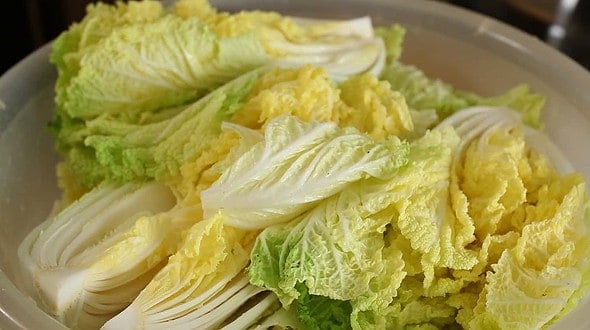
- Let the cabbages rest for 2 hours. Turn over every 30 minutes, so they get well salted. From time to time you can ladle some of the salty water from the bottom of the basin over top of the cabbages if you want to.
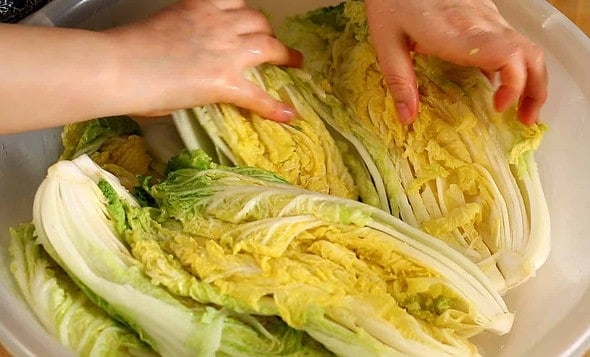
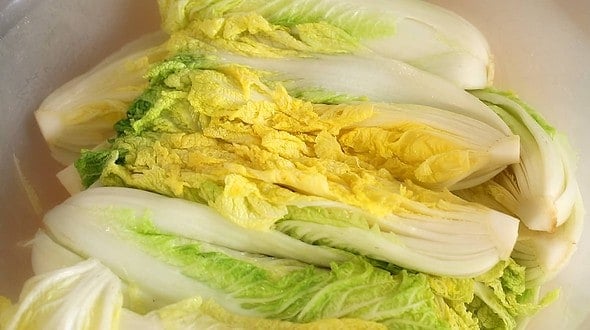
- After 2 hours, wash the cabbage halves a few times under cold running water. Giving them a good washing, to remove the salt and any dirt. As you wash, split the halves into quarters along the slits you cut into earlier. Cut off the cores, and put them in a strainer over a basin so they can drain well.
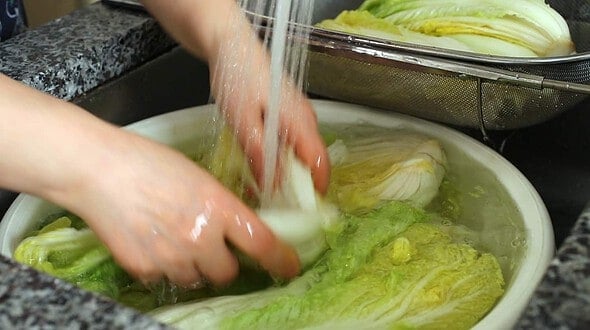 While the boodle is salting for 2 hours, and in between the times you ’ re turning it over, you can make the porridge :
- Combine the water and the sweet rice flour in a small pot. Mix well with a wooden spoon and let it cook over medium heat for about 10 minutes until it starts to bubble. Add the sugar and cook 1 more minute, stirring. Remove from the heat and let it cool off completely.
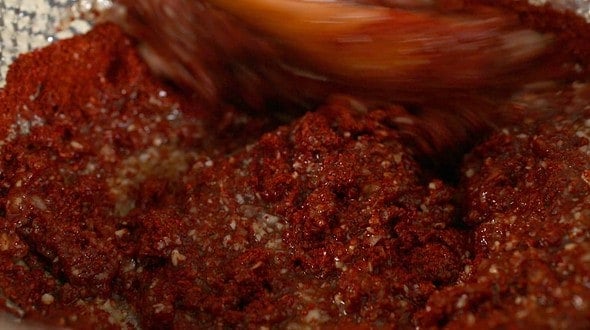
- Pour cooled porridge into a large mixing bowl. Add garlic, ginger, onion, fish sauce, fermented salted shrimp, and hot pepper flakes. Mix well with the wooden spoon until the mixture turns into a thin paste.
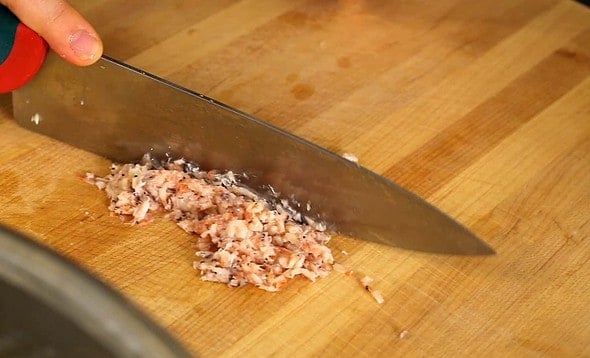
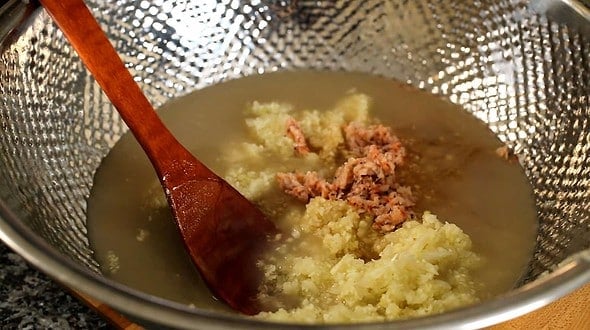
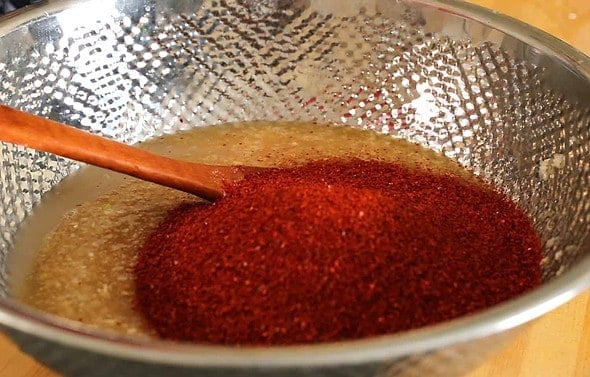
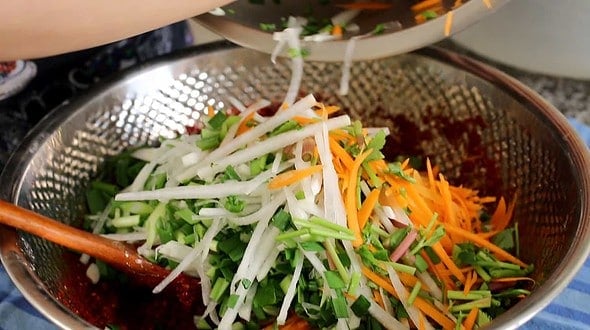
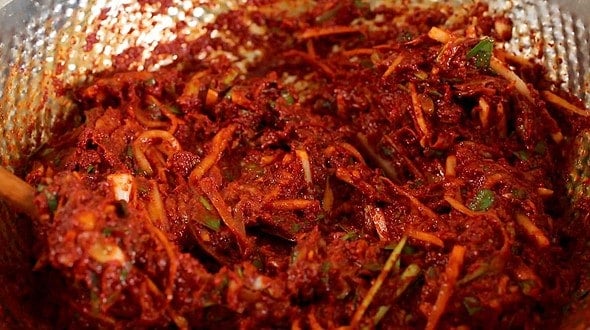
- Add the radish, carrot, and green onion, plus the Asian chives (or more green onions) and the water dropwort if you’re using them. Mix well.

Make kimchi :
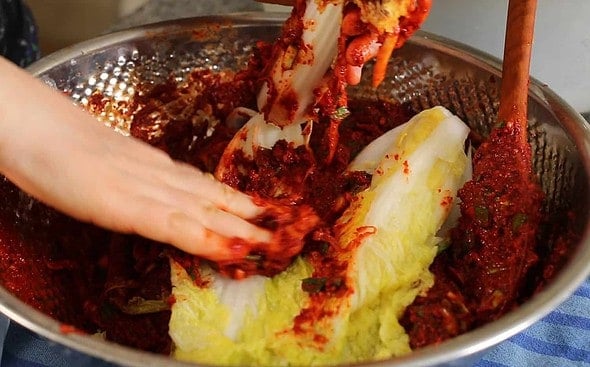
- Spread some kimchi paste on each cabbage leaf. When every leaf in a quarter is covered with paste, wrap it around itself into a small packet, and put into your jar, plastic container, or onggi.
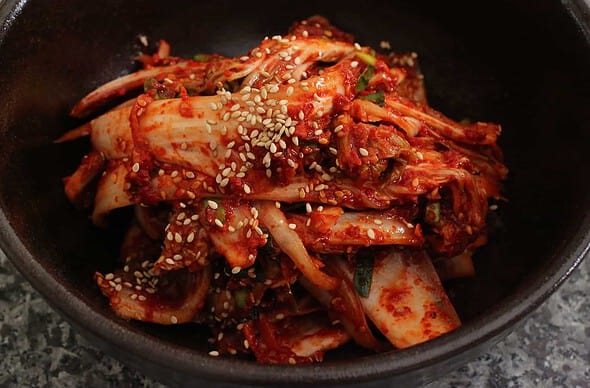
- Eat right away, or let it sit for a few days to ferment.
 On zymosis :
- The kimchi will start fermenting a day or two at room temperature, depending on the temperature and humidity of your room. The warmer and more humid it is, the faster the kimchi will ferment. Once it starts to ferment it will smell and taste sour, and pressing on the top of the kimchi with a spoon will release bubbles from beneath.
- Once it starts to fermented, store in the refrigerator to use as needed. This slows down the fermentation process, which will make the kimchi more and more sour as time goes on.