
Shares Kimchi Kimbap ( 김치김밥 ) is literally a seaweed rice roll filled with a diverseness of delicious fillings, which features kimchi as the main fill .
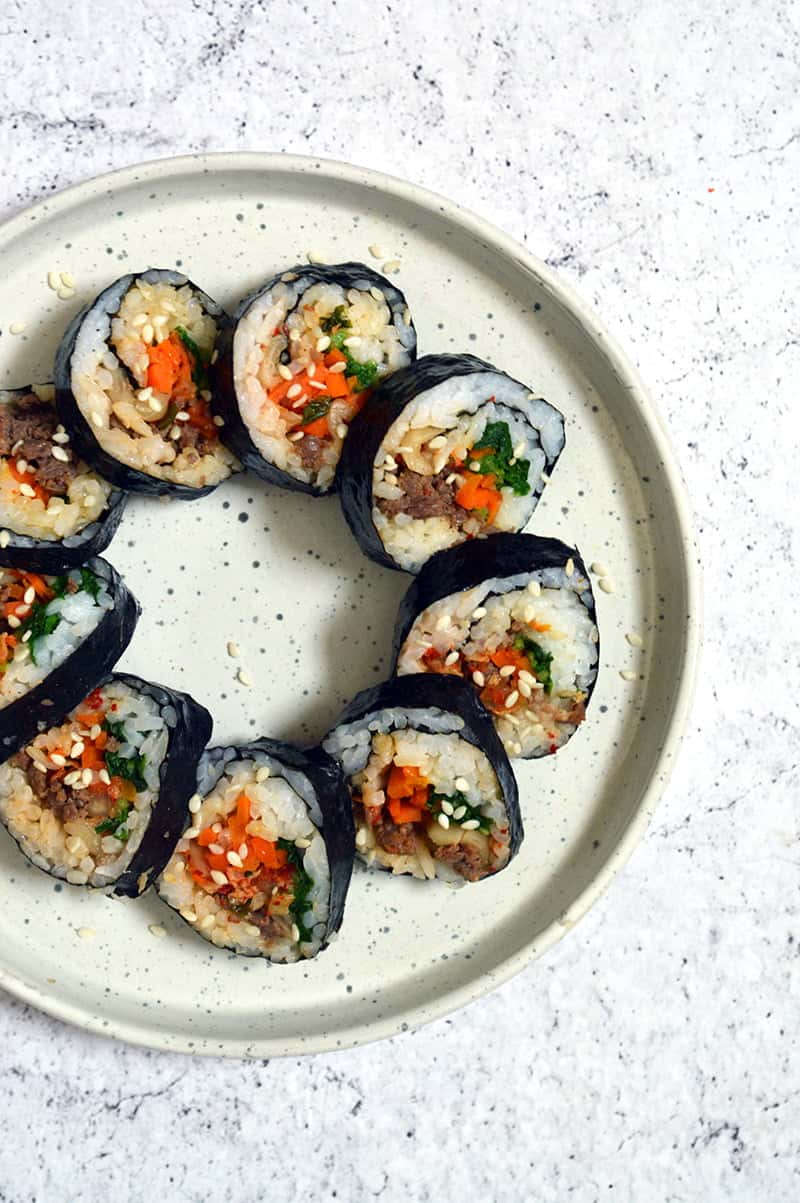
Kimchi and kimbap are two all-important food for korean people. Kimchi played a huge function in korean cuisine as it is used at about every meal either as an appetizer, a side cup of tea, or an component for cooking. meanwhile, kimbap is associated with everyday food because it is alimentary, portable, and versatile Hence, it normally shows up during picnics and school battlefield days. They are pretty much everywhere in Korea .
You can decidedly make your own key signature kimbap by adding your front-runner ingredients, or by making different shapes. It is besides playfulness to add a limited component to give a different flex to the original kimbap, precisely like this Kimchi Kimbap recipe. This translation uses delightful fermented kimchi to give a lemony, umami, and refreshing taste rather of using danmuji, the all-important ingredient in making adept kimbap. In addition, the piquant and crunchy kimchi besides adds a fantastic texture to the kimbap. If you are searching for original and authentic kimbap, check out my previous Kimbap recipe .
What Fillings Go with Kimbap?
The beauty of kimbap rolls is you can customize them with your prefer ingredients, angstrom hanker as you can stuff and roll them up into beautiful cylinders. hera are some common occupy ingredients used for kimbap ;
- Rice: short-medium rice grain, brown rice.
- Protein: bulgogi/ground beef, chicken, egg, ham, tuna, fish cake, imitation crab, cheese.
- Vegetables: kimchi, carrot, spinach, zucchini, cucumber, burdock root, danmuji/pickled radish, daikon.
Tips for Making Kimchi Kimbap
once you have all the ingredients prepped, the meet goes by reasonably quickly, and it ’ s worth it because it ’ s like having a well-balanced meal in every bite. here are some tips for making Kimchi Kimbap .
1. Squeeze out kimchi juice
Kimchi ’ mho season is pretty complex depending on the vegetables, distance of zymosis, and the sum of salt or sugar used. The chief season notes you will find in kimchi include sour, piquant, and umami. Because kimchi is a ferment dish, it has a big sour flavor as the lactic acid produced by bacteria during zymosis, creating a lemony and pungent spirit .
Although there are many varieties of kimchi, this chinese cabbage boodle kimchi or b aechu-kimchi ( 배추김치 ) is arguably the most common and democratic variety used in kimbap. You can find many kimchi brands in the refrigerator department at your local supermarket that varies wildly in appearance, texture, and sample. sometimes I find them tasty to my like, but others are besides salty, vinegary, or sour they will make you pucker. After a series of disappointments, largely because the boughten kimchi did not have the taste I wanted, I normally make my own Napa Cabbage Kimchi .
As kimchi is slightly wet, I like to squeeze the juice out of the kimchi when measuring then that it does not make kimbap inert. After that, I chop it into smaller pieces to make the roll process easier .
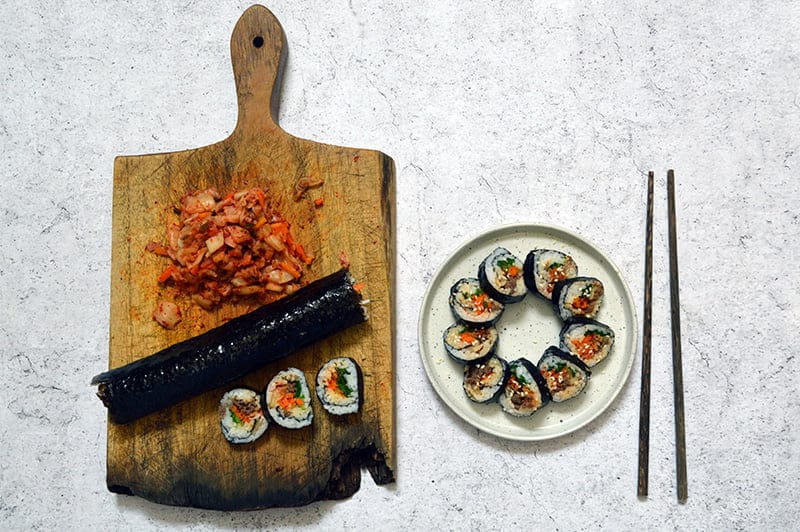
2. Use freshly cooked rice
newly cooked rice is the best for making kimbap because it tends to stick easier to the seaweed. Wet your fingers before spreading the rice onto the seaweed to prevent the rice from sticking to your hands. Put a small bowl of water system adjacent to your rolling station so that you can wet your pass in between rolls .
3. Season everything
traditionally, the rice and fillings in kimbap are individually seasoned to give an interesting combination of textures and flavors. For the rice, it is traditionally seasoned with sesame oil and strategic arms limitation talks. You will notice a huge unlike relish between the seasoned and unsalted rice. The season rice in truth takes plain rice to tasty heights .
For the meat, I marinate it with soy sauce, sesame oil, sugar, and garlic. interim, the vegetables normally are blanched or stir-fried lightly to retain their master flavor. then, they are seasoned with a small amount of sesame oil and salt equitable to give them a nutty season and piquant notes. You do not need to dip kimbap into any kind of sauce after everything is seasoned well .
4. Roll kimbap tightly
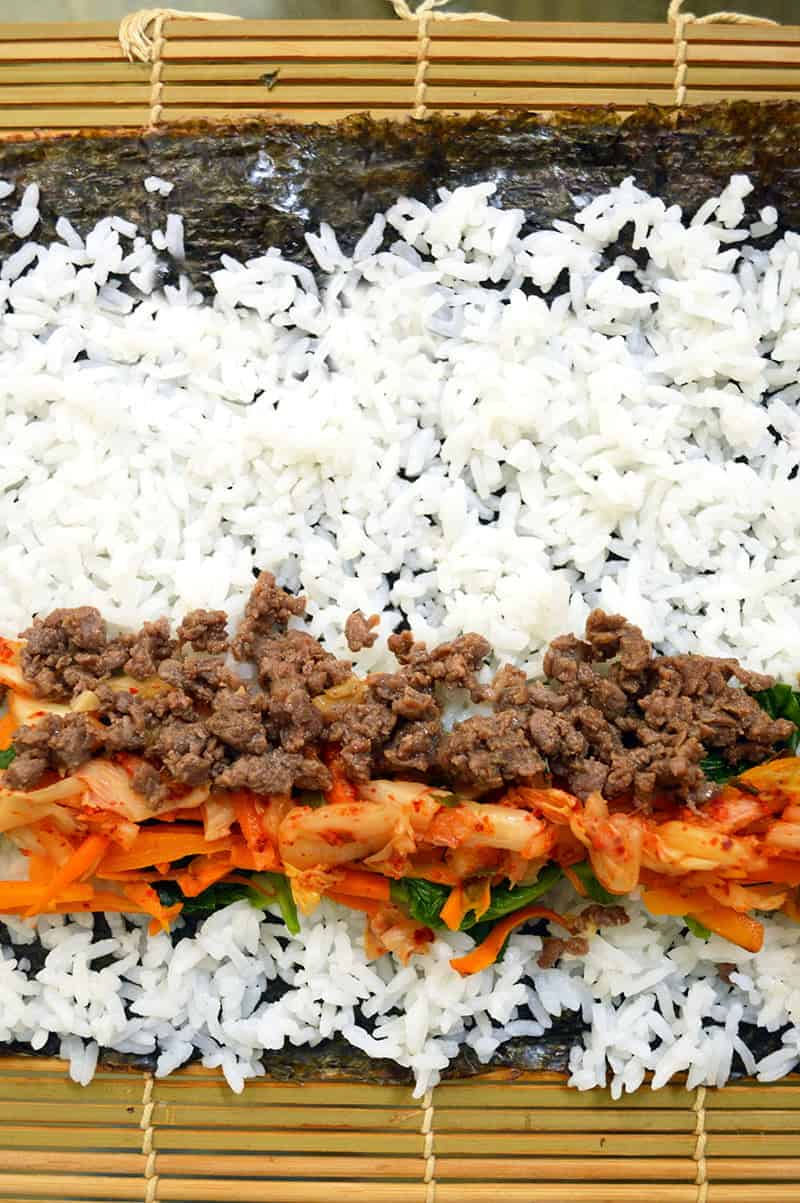
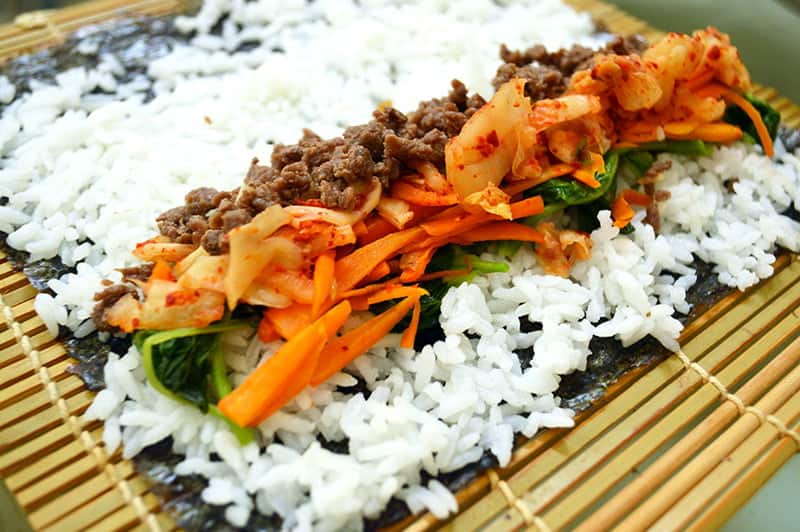
It takes some practice to roll the kimbap absolutely. Use a bamboo sushi roller or a piece of canister foil to roll them well. Lay the glistening side of seaweed down and spread the rice, leaving the top 1-2 inches bare. Lay the fillings about a one-third of the way up from the buttocks of the seaweed. then, cast from the buttocks and wardrobe down to make the fillings stay in. As you continue to roll, put the whole thing down toward the end of the bamboo mat. Just remember to roll it tightly by putting tauten, even pressure with your hands all over the roll. Spread a bantam dab of water along the lead seam to hold the roll together .
5. Brush kimbap with sesame oil
Rub or brush the roll with a little bit of sesame oil for an extra nutty relish and glazed attend. This action besides makes it easier to cut. then, use a sharp tongue for cutting your rolls. You need to make a clean slicing movement without pressing on the roll or everything will fall apart. occasionally wipe the knife with a besotted wallpaper towel or fabric to clean the starch murder and to ease the cut summons .
6. Make bibimbap with leftovers
I tend to leave a bunch of leftovers when making kimbap. Simply put the leftovers on top of a bowl of steaming rice, add gochujang sauce and mix them all together into Bibimbap .
Read more: Cucumber Kimchi (Oi Kimchi)
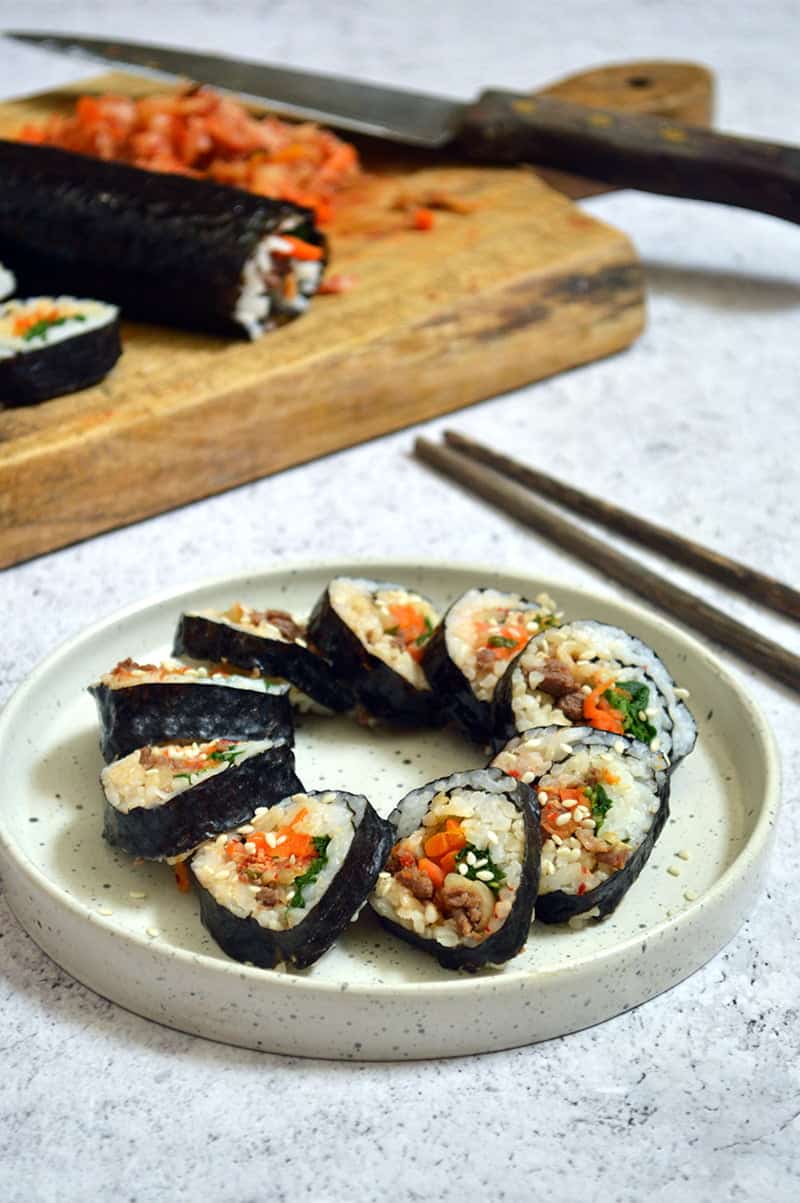
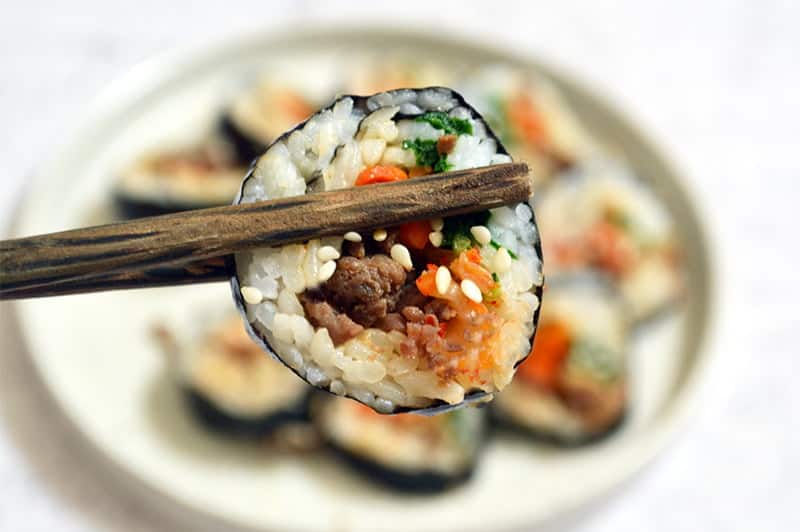
More Korean Recipes
If you don ’ thyroxine know, I have tons of delectable korean recipes here for you to try :
Yield: 5 rolls
Kimchi Kimbap
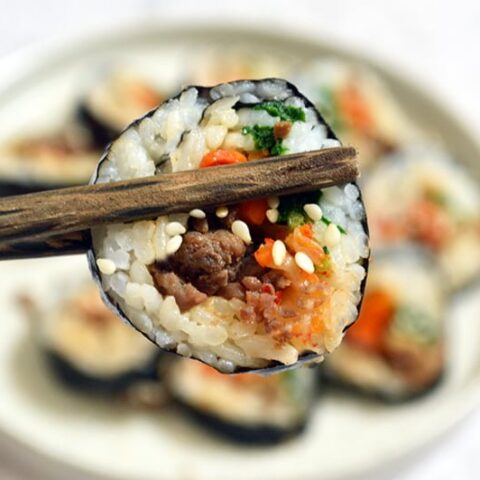
Kimchi Kimbap is literally seaweed rice peal filled with a variety of delectable fillings, which features kimchi as the chief fill .
Prep Time
45 minutes
Cook Time
25 minutes
Total Time
1 hour
10 minutes
Ingredients
- 5 sheets nori/seaweed sheet
- 4 cups freshly cooked short-medium white rice
- 2 tsp sesame oil
- 1/2 tsp salt, or more for taste
- sesame oil, for serving
- toasted sesame seeds, for garnish
Vegetables
- 1 cup Napa Cabbage Kimchi (225 gr)
- 1 small bunch spinach, stems removed
- 1 medium carrot, julienned
- 1 tsp sesame oil
- 1/2 tsp salt, or more for taste
- vegetable oil
Marinated Beef
- 225 gr bulgogi/ground beef
- 1 tbsp soy sauce
- 2 tsp sesame oil
- 1 tbsp granulated sugar/brown sugar
- 1/2 tsp minced garlic
- vegetable oil
Instructions
rice
- Place freshly made rice in a large bowl. Gently mix salt and sesame oil over top with a rice scoop. Let it cool down enough so it’s no longer steaming. Cover and set aside.
Vegetables
- Bring a large pot of water to a boil over high heat and prepare an ice bath. Blanch the spinach, place immediately in the ice bath, then squeeze out water. Season with 1/2 tsp sesame oil and 1/4 tsp salt. Set aside.
- Combine the carrot matchsticks with 1/4 tsp salt. Mix well and let it sweat for 5-10 minutes. Heat a pan and add a few drops of vegetable oil. Squeeze out excess water from the carrot, then saute for about 1 minute. Stir in 1/2 tsp sesame oil. Set aside.
- Squeeze out kimchi juice with hands. Chop the kimchi into smaller pieces. Set aside.
Marinated gripe
- Marinate the beef with soy sauce, sesame oil, sugar, and garlic.
- Heat up a pan over medium-high heat and cook the marinated beef until well cooked. Set aside.
fabrication
- Place a sheet of nori on a bamboo mat with the shiny side down. Spread evenly about 3/4 cup cooked rice over the top, leaving about 1 inch uncovered on top of the nori. Place beef, kimchi, carrot, spinach in the center of the rice.
- Use both hands to roll the mat over the fillings. Remove the roll from the mat. Repeat 4 more times with the remaining ingredients.
- Brush sesame oil on the finished rolls and sprinkle some sesame seeds over the top. Cut each roll into 1/4 inch bite-size pieces with a sharp knife, occasionally wiping it with a wet paper towel or cloth to clean the starch off and to ease cutting. Put it on a plate and serve immediately or pack it in a lunchbox.
Did you make this recipe?
Please leave a star rat or review on the comment section and tag @ jacintahalim on Instagram. This provides helpful feedback to both me and other readers. glad cook !
Shares


