
Fermenting Tradition: Kimchi in South Korea
Koreans consume a sock 2 million tons of kimchi a class, and they ’ re not the alone ones. [ one ] As the raw food craze takes off, the ferment cabbage dish is spreading beyond the korean peninsula to win over westerly foodies and health-nuts alike. Popularized in part by Sandor Katz, self-proclaimed agitation fetishist, kimchi is now widely consumed—from the Tennessee countryside Mr. Katz calls home plate, to trendy restaurants in New York and L.A. Yet, for Koreans, kimchi is far from a hot, fresh drift : it ’ s a count of survival, tradition and cultural identity .
Kimchi originated in Korea during the Three Kingdoms menstruation ( first century BC to the seventh hundred AD ). By that time, families had long used preservation methods to keep a constant food issue for their families during the long, harsh winters. thus, when the first boodle arrived to Korea in 2030 B.C., families turned to zymosis to preserve it. In the sixteenth hundred, the beginning chili peppers arrived from the Americas giving kimchi its touch blue flare, and the recipe was complete. A blend of cabbage, garlic, pep, hot red chili peppers, vegetables, pisces sauce and often seafood, kimchi has since established itself as a korean culinary staple .
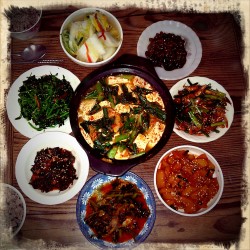 indeed, kimchi is the one food that most Koreans plainly “ can not live without. ” [ two ] Whether served in a stew, atop fried rice or on its own, it seems to make its manner into every meal of the day. In fall, south korean employers even give their workers a customary “ kimchi bonus, ” helping to subsidize the ingredients for their annual kimchi provide. [ three ] Women are traditionally the ones to prepare the dish, throwing in a pinch of this and a handful of that to yield a spirit classifiable to each family. even with the growing influence of industrially produced foods—including imports of refined kimchi from China—the majority of Koreans continue to prepare kimchi in their very own kitchens .
The importance of kimchi was underscored in 2010 when torrential rains and typhoons destroyed that year ’ second craw of chinese cabbage pilfer, the variety most normally used for kimchi. [ four ] South Korea ’ s boodle dearth led to a sudden price spike and a full-blown pilfer crisis. In light of the crop ’ s central importance, government officials were forced to respond promptly, temporarily suspending import tariffs to stabilize prices and satisfy the nation ’ s need for boodle and, of course, kimchi. The south korean agricultural sector managed to recover from the cabbage crisis of 2010, and korean farmers continue to furnish most of the boodle consumed in the state. But farmers face many challenges.
nowadays, dazzling cities encroach on rural farming regions and the government sees domestic agribusiness as a abject priority—instead pursuing policies such as the recently-signed US-Korea Free Trade Agreement ( FTA ). Experts and Korean social movements argue the FTA will destroy farmer livelihoods, resulting in a crushing loss of South Korea ’ second peasant polish. [ five ] Amidst these economic and agricultural transformations, however, kimchi ’ s fourteen-century-old tradition remains a ceaseless cultural violence. simple but significant, kimchi continues to tie Koreans second to their roots, fermenting custom and possibly even struggles for food sovereignty .
BAECHU (CABBAGE) KIMCHI
From Wild Fermentation by Sandor Katz
Stay in the loop with Food First!
Get our mugwump analysis, inquiry, and other publications you care about to your inbox for free !
Sign up today!
Ingredients :
Sea salt 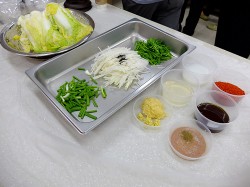
1 syrian pound chinese cabbage
1 radish radish plant or a few red radishes
1-2 carrots
1-2 onions, leeks, scallions, or shallots
3-4 cloves of garlic
3-4 hot red chilies
3 tablespoons ginger root
Preparation :
1 ) Mix a brine of 4 cups of water and 4 tablespoons of salt. Stir well to thoroughly dissolve salt. The brine should taste good and salty .
2 ) coarsely chop the cabbage, then slice the radish and carrots. Cover the vegetables with a plate or other weight to keep them submerged in the brine, allowing them to soak until soft ( a few hours or overnight ). Add other vegetables to the brine – snow peas, seaweeds, Jerusalem artichokes, anything you like .
3 ) Prepare the spices : grate the ginger, chop the garlic and onion, remove seeds from the chilies and chop or squash, or throw them in unharmed. Mix spices into a glue .
4 ) Drain brine off vegetables, reserving the seawater. If the vegetables taste besides piquant, rinse them. otherwise, if not salty enough, sprinkle with a copulate of teaspoons of salt and mix .
5 ) Mix the vegetables with the ginger-chili-onion-garlic spread. Mix everything together thoroughly and stuff into a clean quart-size liter jar. Pack tightly into jar, pressing down vegetables until the seawater rises. If necessary, add the reserved vegetable-soaking seawater. Weight the vegetables down with a leaden jar or cup of tea .
6 ) ferment in a warm area. After about a week of zymosis, move the kimchi to the refrigerator. An option, more traditional method acting is to ferment the kimchi for a longer period of clock in a cool spot – cadaver pots placed in the ground, a basement, etc .
Want to learn more about kimchi, and the South Korean struggle for food sovereignty? Join Food First in South Korea: Land, Food, and Democracy, May 9-17th, 2015! Click here for more information.
Cited:
[ iodine ] “ South Korea in midst of pickled boodle crisis, ” Telegraph, April 20, 2010. Accessed January 15, 2013. hypertext transfer protocol : //www.telegraph.co.uk/news/worldnews/asia/southkorea/7609285/South-Korea-in-midst-of-pickled-cabbage-crisis.html
[ two ] “ South Korea ’ mho kimchi crisis : Of cabbages and Kims. ” The Economist, October 7, 2010. Accessed January 21, 2013. hypertext transfer protocol : //www.economist.com/node/17204655
Read more: Cucumber Kimchi (Oi Kimchi)
[ three ] Katz, Sandor Ellix. Wild Fermentation ( Vermont : Chelsea Green, 2003 ), 45-47 .
[ intravenous feeding ] Chi Lin, Joseph. “ cabbage crisis : South Korea Runs Out of Kimchi. ” Time Newsfeed, October 7, 2010. Accessed January 30, 2013. hypertext transfer protocol : //newsfeed.time.com/2010/10/07/cabbage-crisis-south-korea-runs-out-of-kimchi/
[ volt ] Miles, Albie and Christine Ahn. “ Free Trade Kills Korean Farmers, ” FPIF, February 15, 2011. Accessed January 31, 2013. hypertext transfer protocol : //www.fpif.org/articles/free_trade_kills_korean_farmers


